
THE INVISIBLE LINE
IN DEVELOPMENT
The project is currently entering its pre-production phase, with field production scheduled for January 2027
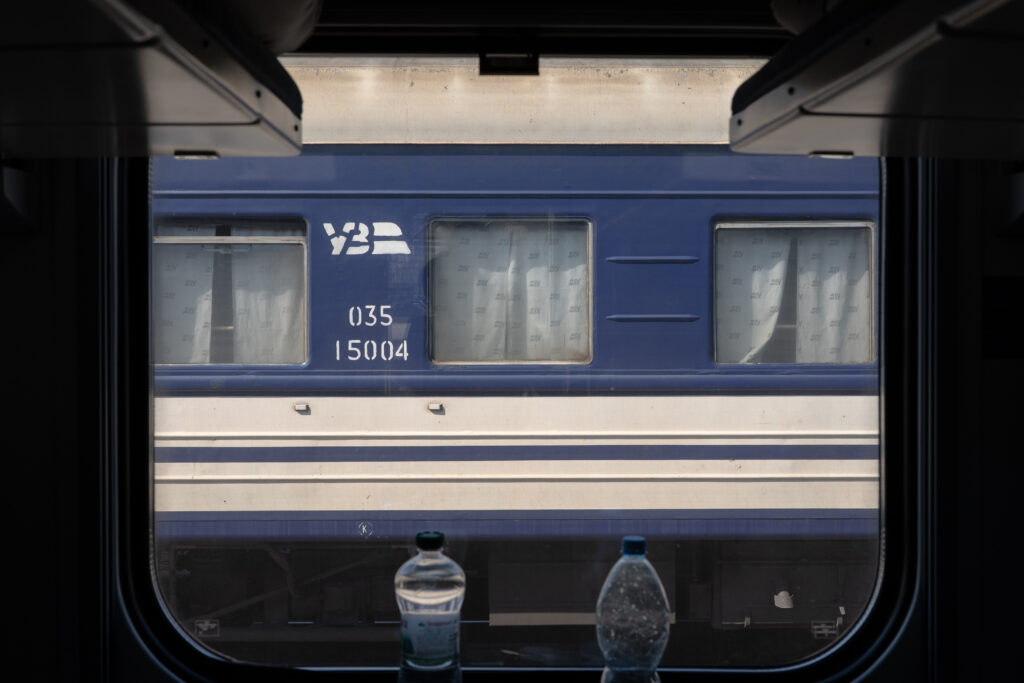
The Invisible Line is an ongoing photographic and multimedia archive exploring everyday life, collective memory and civilian resilience through Ukraine’s railway network.
Rather than focusing on the visual language of the frontline, the project turns towards the quieter infrastructure that allows life to continue: trains, stations, workers, routines and the journeys connecting cities across the country.
At its centre is the daily work of Ukrainian sleeper-car attendants — provodnytsia — whose repetitive gestures of preparing compartments, making beds, serving tea and caring for passengers become rituals of continuity within a country living through prolonged war.
The project follows these journeys across changing landscapes and seasons, documenting the intimate relationship between people and the railway spaces they inhabit. At times, the trains become temporary homes; at others, places of departure, return, waiting and memory.
The railway is therefore not simply the setting of the work, but its central thread: a moving line through which personal stories, civilian infrastructure and the changing geography of Ukraine become connected.
The final work will combine photography, field recordings, voices, archival material and physical objects gathered during the journeys, culminating in a spatial multimedia installation.
The Invisible Line is conceived as a long-term project, beginning with a winter field-production phase in January 2027 and developing through subsequent journeys, research and encounters across Ukraine.
The Invisible Line is an ongoing photographic and multimedia archive exploring everyday life, collective memory and civilian resilience through Ukraine’s railway network.
Rather than focusing on the visual language of the frontline, the project turns towards the quieter infrastructure that allows life to continue: trains, stations, workers, routines and the journeys connecting cities across the country.
At its centre is the daily work of Ukrainian sleeper-car attendants — provodnytsia — whose repetitive gestures of preparing compartments, making beds, serving tea and caring for passengers become rituals of continuity within a country living through prolonged war.
The project follows these journeys across changing landscapes and seasons, documenting the intimate relationship between people and the railway spaces they inhabit. At times, the trains become temporary homes; at others, places of departure, return, waiting and memory.
The railway is therefore not simply the setting of the work, but its central thread: a moving line through which personal stories, civilian infrastructure and the changing geography of Ukraine become connected.
The final work will combine photography, field recordings, voices, archival material and physical objects gathered during the journeys, culminating in a spatial multimedia installation.
The Invisible Line is conceived as a long-term project, beginning with a winter field-production phase in January 2027 and developing through subsequent journeys, research and encounters across Ukraine.